 EN
EN

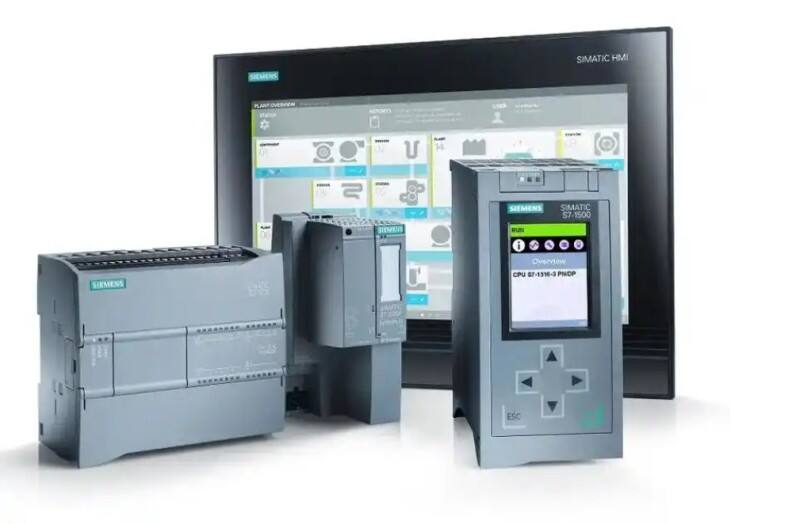
Industrial Internet of Things (IIoT) and Real-Time Data Connectivity
The rise of connected industrial devices in smart manufacturing
Factories these days are packing in around 15 thousand connected gadgets per location give or take, everything from those fancy smart sensors right down to self-driving robots according to Ponemon's report last year. All this extra connectivity actually solves a big problem that has been plaguing manufacturing for ages. About 57 percent of unexpected production stoppages happen because some piece of equipment just breaks down when nobody's looking. When manufacturers hook up their machines with internet of things tech to central control panels, they get this amazing bird's eye view of operations that used to be scattered all over the place. No more blind spots in the workflow basically.
How IIoT enables seamless data flow across smart factory systems
Industrial IoT protocols such as OPC UA and MQTT help connect older factory equipment with newer digital systems. Take injection molding presses for instance. When paired with edge gateways, these machines can send their performance data straight to cloud based ERP systems. Factory managers then get live updates on things like how much material is being used and what the energy consumption looks like at any given moment. The ability to talk across different systems has made a real difference in manufacturing efficiency. According to several case studies from automotive plants, this kind of system integration typically cuts down on waste somewhere between 18% and 22%, depending on the specific production line setup and maintenance practices.
Case Study: Remote monitoring with AWS IoT Greengrass
A leading automotive parts supplier implemented edge computing nodes across 14 global plants to analyze equipment vibration data. This setup reduced unplanned downtime by 41% through predictive maintenance alerts, while cutting cloud data transfer costs by $290k annually. Maintenance teams now resolve 83% of anomalies before production impacts occur.
Strategy: Building secure, scalable, and interoperable IIoT networks
| Priority | Implementation | Benefit |
|---|---|---|
| Security | Hardware-based TPM 2.0 modules | Prevents 96% of edge device tampering |
| Scalability | Kubernetes orchestration | Supports 200–500% device growth |
| Interoperability | OPC UA Unified Architecture | Integrates 95% of industrial protocols |
Manufacturers adopting this framework report 3.1× faster deployment cycles for new IIoT applications compared to siloed architectures (PwC 2023).
Edge Computing for Low-Latency Decision-Making in Smart Factories
Traditional cloud-only architectures struggle with latency spikes of 100–500 milliseconds, making them unreliable for time-sensitive industrial processes like robotic assembly lines or chemical batch control. Edge computing reduces this delay to 1–10 milliseconds by processing data locally at manufacturing equipment and sensors, enabling real-time adjustments to temperature, pressure, and machine alignment.
Combining Edge and Cloud Computing for Distributed Intelligence
In hybrid system setups, about two thirds of all operational data gets sent straight to edge nodes where it can be processed right away, leaving just the summarized findings to travel to main cloud servers for deeper analysis later on. Take those vibration sensors attached to CNC machines as an example they work with local processors that spot when tools start wearing down within around 5 milliseconds flat, which then sets off automatic adjustments to keep things running smoothly. At the same time, these edge gateways gather up performance data over time and send updates to cloud based predictive maintenance systems roughly once per day. This approach balances real time responsiveness with longer term strategic planning across manufacturing operations.
Optimizing Response Time and Bandwidth Through Localized Processing
When companies implement localized data processing instead of relying solely on cloud models, they typically see around 90% reduction in network bandwidth usage and about a 20% boost in spotting anomalies. Manufacturing facilities that have adopted edge computing report significantly fewer unexpected shutdowns because they can monitor machinery condition right where production happens. Major cloud service companies offer edge frameworks with built-in analytics tools that handle critical alerts first, such as shutting down machines in emergencies, before dealing with regular maintenance logs. We're seeing new installations pair edge hardware with 5G connectivity to get response times under 10 milliseconds for robots working alongside humans, adjusting their grip strength based on live video input from factory floors. Independent studies back up what manufacturers are experiencing firsthand: these hybrid systems slash waste materials by approximately 25% in sectors requiring extreme precision, like making computer chips, thanks to near instant communication between smart cameras at the factory floor level and the actual robotic arms doing the work.
Industrial Data Integration with AWS IoT SiteWise and Asset Modeling
Breaking down data silos for unified operational visibility
Smart factories create around 2.5 times more data compared to regular manufacturing setups, but most companies are stuck dealing with isolated systems that make it hard to see what's really happening in real time according to Ponemon research from last year. The good news is AWS IoT SiteWise helps fix this mess by bringing together all sorts of factory data including machine performance numbers, ERP system results, and quality control records into one central database. With this setup, managers can access comprehensive dashboards across entire plants that show how different factors connect like electricity usage, Overall Equipment Effectiveness or OEE for short, and production output rates throughout the facility.
Contextualizing sensor and equipment data using AWS IoT SiteWise
Today's manufacturing setups often have over 300 sensors installed on each assembly line, yet all those numbers don't really tell us much about what's actually happening on the factory floor. That's where AWS IoT SiteWise comes into play. The platform adds meaning to all that raw data by organizing it through hierarchical asset models. Think of it as connecting vibration measurements from a particular motor assembly or linking temperature readings directly to specific batches of products being made. When predictive maintenance systems can see which assets are most critical, they know where to focus their attention first. According to recent industry research from 2024 looking at how companies implement industrial IoT solutions, teams that adopted SiteWise saw their analytics pipeline setup times drop around 40 percent compared to when they were building everything from scratch themselves.
Case Study: Unified asset models for plant-wide performance analytics
A global automotive supplier standardized 12,000+ CNC machines across 23 factories using AWS IoT SiteWise, achieving:
- 25% faster root-cause analysis for quality deviations
- 18% energy savings via centralized demand forecasting
- Unified KPIs across legacy and modern PLC (Programmable Logic Controller) systems
Trend: Standardizing multi-vendor data formats in smart factories
Over 76% of manufacturers now use OPC UA and MTConnect standards to normalize data from 15+ equipment vendors (2024 Manufacturing Data Survey). AWS IoT SiteWise accelerates this shift with prebuilt industrial data connectors, reducing protocol translation efforts by 60% in mixed-fleet environments.
Cyber-Physical Systems (CPS) and Automation for Intelligent Control
Integrating Digital Twins, Networking, and Physical Processes
Smart factories today rely on cyber physical systems (CPS) for creating two way communication channels between digital models and actual factory machinery. When companies connect their digital twin technology with standard industrial networks such as OPC UA, they get synchronized operations happening in real time throughout the whole production setup. What this means practically is that machines can make adjustments before problems happen, which cuts down on wasted materials during precise manufacturing tasks. Some studies show material savings ranging from about 9% up to around 14% according to research published in Nature last year. For manufacturers dealing with tight margins, these kinds of efficiencies matter a lot in staying competitive while keeping costs under control.
Core Architecture of CPS in Smart Manufacturing Environments
A robust CPS framework combines three critical components:
- Edge computing nodes for localized decision-making
- Unified asset models standardizing multi-vendor equipment data
- Secure MQTT/AMQP protocols for machine-to-cloud communication
Recent implementations show this architecture reduces latency in quality control processes by 800ms compared to cloud-only systems.
Case Study: Digital Factory Implementation with Virtual Production Systems
A global appliance manufacturer reduced assembly line reconfiguration time by 32% using CPS-powered digital twins. Engineers tested 18 production scenarios virtually before implementing optimal layouts, with AWS IoT SiteWise streaming performance data to both virtual and physical control systems.
Collaborative Robots (Cobots) Enhancing Human-Machine Workflows
CPS-enabled cobots now handle 42% of repetitive tasks in automotive assembly plants while maintaining <0.1mm positioning accuracy. These systems use real-time lidar data to dynamically adjust paths when human operators enter shared workspaces, exemplifying advanced human-CPS collaboration.
AI and Machine Learning for Predictive Analytics in Smart Manufacturing
Demand for Self-Optimizing and Adaptive Production Systems
Smart factories today need systems that can handle changing material qualities, varying equipment states, and sudden order modifications on their own. According to a recent McKinsey report from 2023, companies implementing these kinds of adaptive AI solutions saw their production lines speed up by around 18% compared to those sticking with traditional automated rules. What makes this possible? These intelligent systems constantly process both past performance metrics and live sensor data coming in from all over the factory floor. They then make adjustments to things like robotic arm positioning, conveyor belt speeds, and even what counts as acceptable product quality standards—all while nobody needs to manually step in or override anything during operation.
AI-Driven Quality Prediction and Anomaly Detection Models
In today's top automotive factories, machine learning systems are catching production problems with about 99.2% accuracy through analysis of multiple sensor readings at once. These neural network models get smarter over time as they learn from past defects, spotting tiny changes in how machines vibrate and heat up long before anything goes wrong. The result? Potential issues get flagged around 47% sooner than what old school statistical methods could manage. Some studies looking at textile manufacturing show these AI models cut down on false alarms by roughly 63% when compared to simple threshold warnings. Plus, they keep watching operations non stop without missing a beat throughout the day and night.
Case Study: Reducing Scrap Rates in Semiconductor Fabrication with ML
A silicon wafer producer implemented ensemble ML models to predict edge deposition irregularities caused by nanoscale temperature variations. By integrating real-time thermal imaging with equipment logs, the system auto-adjusted plasma etch parameters every 11 seconds, achieving:
| Metric | Before ML | After ML | Improvement |
|---|---|---|---|
| Scrap Rate | 8.2% | 2.1% | 74% – |
| Energy Consumption | 41 kWh/cm² | 33 kWh/cm² | 20% – |
| Inspection Time | 14 hr/lot | 2 hr/lot | 86% – |
Emerging Trend: Federated Learning for Cross-Factory Model Training
Manufacturers now employ privacy-preserving federated learning frameworks to collectively train anomaly detection models across 12+ global facilities without sharing raw data. A 2024 Industrial AI Consortium report showed this approach improves model accuracy by 29% compared to single-factory training while complying with GDPR and IP protection requirements.
FAQs
What is Industrial Internet of Things (IIoT)?
The Industrial Internet of Things (IIoT) refers to the integration of internet-connected technologies into industrial processes, allowing for seamless data flow and enhanced operational visibility in smart manufacturing environments.
How does edge computing improve manufacturing efficiency?
Edge computing improves manufacturing efficiency by processing data locally at manufacturing equipment and sensors, reducing latency, optimizing response times, and decreasing network bandwidth usage. It enables real-time adjustments to critical factors like temperature and pressure, thereby improving immediate responsiveness in production environments.
What is the role of AI in smart manufacturing?
AI models in smart manufacturing environments enhance predictive analytics through adaptive systems that self-optimize and adjust operations based on real-time data. AI-driven analytics improve efficiency, reduce production errors, and help in anomaly detection, resulting in faster and more reliable operational outcomes.
Why is federated learning important for manufacturers?
Federated learning is crucial for manufacturers as it allows for collaborative training of models across facilities while maintaining data privacy. It improves model accuracy and compliance with regulations like GDPR, making it an attractive approach for cross-factory data analysis.
Table of Contents
- Industrial Internet of Things (IIoT) and Real-Time Data Connectivity
- Edge Computing for Low-Latency Decision-Making in Smart Factories
- Industrial Data Integration with AWS IoT SiteWise and Asset Modeling
- Cyber-Physical Systems (CPS) and Automation for Intelligent Control
- AI and Machine Learning for Predictive Analytics in Smart Manufacturing
- Emerging Trend: Federated Learning for Cross-Factory Model Training
- FAQs