 EN
EN

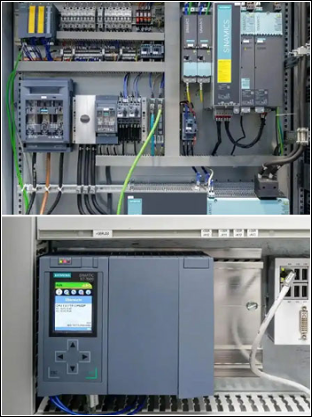
As temperatures rise rapidly in May, industrial sites are about to enter a high-temperature and high-load operation cycle. As the core speed regulation equipment of automated production lines, Variable Frequency Drives (VFDs) operating for a long time in high-temperature, dusty and humid environments are prone to overheating alarms, module aging, parameter drift and shortened service life, which directly affect production line stability and equipment return on assets.
With over 10 years of experience in automation control services, Qida Automation follows the maintenance standards of mainstream VFD brands including Siemens, Rockwell and Schneider. We have sorted out a special May maintenance solution, focusing on three core points: summer high-temperature heat dissipation, parameter optimization and service life extension, helping your equipment run smoothly through summer, reduce failure rates and extend the overall service cycle.
1. Mandatory May Maintenance: Summer High-Temperature Heat Dissipation
High temperature is the No.1 killer of VFDs. Core components such as IGBTs, rectifier modules and electrolytic capacitors are extremely sensitive to temperature. The service life of electrolytic capacitors will be halved for every 10°C rise in ambient temperature. Heat dissipation optimization must be prioritized in May maintenance.
1.1 Deep Cleaning of Air Duct & Heat Dissipation System
- Thoroughly clean dust, oil dirt and fiber debris on cooling fans, heat sinks and air inlets/outlets to avoid blocked air ducts and reduced heat dissipation efficiency.
- Inspect fan speed, abnormal noise and stalling; replace aging or faulty fans immediately to prevent overheating alarms and module burnout.
- Install and clean dustproof nets for control cabinets regularly to balance dust prevention and ventilation, and avoid short-circuit risks caused by dust entering the interior.
1.2 Real-Time Temperature Monitoring & Improvement
- Use a thermometer to detect the temperature of IGBT modules, rectifier bridges and DC bus capacitors; the normal operating temperature is recommended ≤45°C.
- Reserve sufficient ventilation space for control cabinets, keep away from heat sources, direct sunlight and enclosed dead corners.
- Install top exhaust fans and side forced convection fans for high-temperature workshops; use cabinet air conditioners for auxiliary cooling when necessary.
- Record temperature rise curves, establish temperature ledgers, and pre-warn overheating risks in advance.
1.3 Ambient Temperature & Humidity Control
- Keep indoor humidity at 40%–60% to prevent insulation degradation caused by high humidity and electrostatic breakdown caused by low humidity.
- Avoid installing VFDs in open-air, dripping or corrosive gas environments; complete protection and sealing measures.
2. Precision Parameter Optimization: Stable Operation, Lower Loss & Higher Efficiency
May maintenance is not only about cleaning and dust removal, but also parameter calibration and logic optimization. It solves common problems such as parameter drift, false alarms and high energy consumption, keeping VFDs operating in the optimal state all summer long.
2.1 Key Operating Parameter Calibration
- Calibrate acceleration/deceleration time, "hunting" suppression and torque limit parameters to avoid unstable speed, shock vibration and load overcurrent in high-temperature operation.
- Optimize motor parameters: stator resistance, rotor resistance and no-load current to match actual operating conditions and reduce operating loss and heat generation.
- Reset and back up factory parameters and optimized parameters to avoid data loss caused by power failure or component aging.
2.2 Protection Parameter Optimization
- Appropriately adjust overcurrent, overvoltage, undervoltage and overtemperature protection thresholds according to summer load changes, to prevent them from being too sensitive and causing false tripping.
- Perfect stall prevention and overload protection logic to adapt to high-temperature continuous heavy-load operation.
3. Core Inspection & Maintenance: Extend VFD Service Life Systematically
To prolong VFD service life fundamentally, targeted component inspection and regular aging assessment are essential in May.
3.1 Electrical Circuit & Hardware Inspection
- Tighten power terminals and control circuit terminals to prevent poor contact and heating caused by thermal expansion and contraction in high temperature.
- Inspect DC bus capacitors for bulging, liquid leakage and capacity attenuation; replace aging capacitors in advance to avoid sudden shutdowns.
- Check power cables for aging, cracking and overheating discoloration; replace damaged cables timely.
3.2 Regular Aging Assessment & Preventive Replacement
- Evaluate the service life of vulnerable parts: cooling fans, electrolytic capacitors and relay contacts, and formulate a preventive replacement plan.
- Conduct insulation resistance tests regularly for high-power VFDs to eliminate hidden dangers of insulation aging in high-temperature and humid environments.
4. Qida Automation Professional Suggestion
May is the golden maintenance window for VFDs before summer arrives. Standardized heat dissipation cleaning, scientific parameter optimization and targeted hardware inspection can effectively reduce summer failure rates by more than 60%, cut maintenance costs, and greatly extend the service life of VFDs and supporting motors.
Qida Automation supplies brand-new, original brand frequency converters. If you require frequency converter replacements or technical support, welcome to contact us via our official website:
https://www.qidaautomation.com