 EN
EN

Increased Productivity and Operational Efficiency with Programmable Logic Controller (PLC)
How PLCs Enable Faster Cycle Times in Manufacturing
Programmable Logic Controllers or PLCs really boost production speeds when they take over those repetitive tasks that used to need constant human attention. When manufacturers swap out old school relay systems for modern digital logic setups, they cut down on all those annoying mechanical delays while getting much better control over operation timing. Take automotive manufacturing as a good example. On car assembly lines across the country, companies have seen their cycle times drop around 22% after implementing PLC automation. This happens because the controllers can optimize weld sequences and position parts just right. The result? Factories crank out more vehicles each day without compromising on build quality standards at all.
Real-Time Control and Synchronization Across Production Units
Programmable Logic Controllers offer what's called deterministic real time control, which basically means they coordinate all those machines working together in complicated factories without missing a beat. Imagine one main PLC controlling everything from conveyor belt speed to robotic arm movements and quality checks across over fifteen different spots in a packaging plant. This cuts down on those annoying bottlenecks where things get stuck because different parts aren't timed right. The whole system gets sensor feedback every few milliseconds too, so it can tweak stuff like pressure levels or heat settings almost immediately when needed. And guess what? Factories using these systems see around 9 to maybe even 14 percent less waste materials flying around, especially in plastic molding operations. That number comes from some recent studies looking at how efficient automated systems have become lately.
Case Study: 38% Output Increase After PLC Integration in a Bottling Plant
One regional soft drink producer managed to boost production by nearly 40% after installing modular PLC systems on their bottling line over half a year ago. The new setup took care of several tedious manual jobs like checking if caps were properly tightened and adjusting how full each bottle gets filled. They also added some smart software that can spot potential problems before they happen. With real time dashboards showing everything at once, technicians spend way less time fixing issues now about two thirds less according to internal reports. That helped push plant capacity up from around 72 percent running smoothly to almost 94 percent. Plus, energy costs went down too since the motors run more efficiently now, cutting power usage per bottle by roughly 19%. All these improvements make sense when looking at long term savings for manufacturing operations.
Enhanced Process Control, Monitoring, and Predictive Maintenance
Modern programmable logic controller (PLC) systems deliver granular oversight of industrial operations through centralized monitoring and advanced analytics.
Centralized Monitoring and Remote Diagnostics Using Programmable Logic Controllers
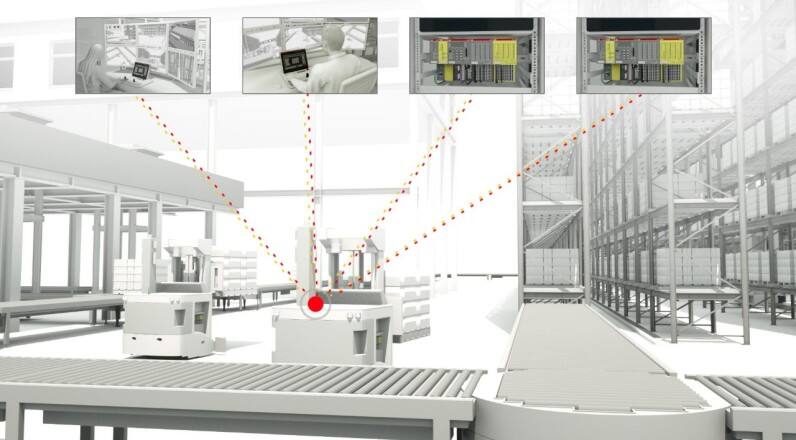
Programmable Logic Controllers bring together all those sensors and machines onto one dashboard, giving managers a complete view of what's happening across the whole facility. When something goes wrong, operators don't need to run around checking equipment manually anymore. They can spot problems right from their desk and fix them much faster. Some reports say response times drop about 40% when using these systems instead of old fashioned inspection methods. Take for instance a chemical plant somewhere in the Midwest last year. Their maintenance team started using real time PLC diagnostics and saw something amazing happen. The number of days lost to faulty valves dropped nearly two thirds over the course of twelve months. That kind of improvement shows just how valuable remote monitoring can be in modern manufacturing settings.
Integration With SCADA for Real-Time Visualization and Alerts
When integrated with Supervisory Control and Data Acquisition (SCADA) systems, PLCs convert raw operational data into actionable insights. Automated alerts for anomalies—such as temperature spikes or pressure deviations—enable proactive interventions. Automotive manufacturers using PLC-SCADA integrations report 28% fewer quality rejections thanks to timely process corrections.
Role of PLC in Minimizing Unplanned Downtime Through Predictive Maintenance
By analyzing historical performance data, PLCs predict equipment degradation before failure occurs. Connected vibration sensors and thermal imaging modules can forecast motor bearing wear with 89% accuracy, based on industrial IoT research. This predictive capability allows maintenance teams to act preemptively, avoiding costly unplanned stoppages.
Trend Analysis: 57% Drop in Maintenance Costs in Food Processing Facilities
A 2023 analysis of 47 food processing plants found that those using PLC-driven predictive maintenance reduced annual maintenance costs by an average of $2.1 million. One dairy processor extended machinery lifespan by 19% and lowered spare part inventory by 34% by shifting from calendar-based to condition-based servicing.
Improved Accuracy, Quality Assurance, and Error Reduction in Manufacturing
Eliminating Human Error in Repetitive Tasks Using Programmable Logic Controller PLC
PLCs execute pre-programmed instructions with micron-level precision, removing variability caused by human involvement in repetitive tasks. According to a study on automated error compensation systems, PLC-driven automation reduces defects by 38% in high-precision sectors like medical device manufacturing through continuous real-time adjustments.
Improved Accuracy and Precision in Pharmaceutical Packaging
In pharmaceutical packaging, PLCs maintain ±0.1mm accuracy during vial filling and blister sealing. This level of control ensures dosage consistency across 99.8% of units, meeting stringent FDA requirements and minimizing rework.
Statistical Process Control (SPC) Enabled by PLC Data Logging
PLCs automatically log critical parameters such as temperature, pressure, and cycle duration, feeding this data into statistical process control (SPC) systems. Deviations are detected within 0.3 seconds—47 times faster than manual checks—enabling manufacturers to sustain six-sigma quality standards.
Flexibility, Scalability, and Cost-Effectiveness of PLC Systems
Programmable Logic Controller (PLC) systems allow manufacturers to adapt quickly to changing demands while maintaining cost efficiency. Their flexibility, scalability, and strong return on investment make them essential in modern automation.
Flexibility and Reprogrammability Accelerate Product Changeovers
Unlike hardwired relay systems, PLCs can be reprogrammed in minutes to accommodate new products or processes. This capability reduces changeover downtime by up to 85%. For instance, automotive assembly lines with PLC-controlled robotics can switch between vehicle models seamlessly—supporting just-in-time production without physical reconfiguration.
Modular Architecture Supporting Scalability in Smart Factories
Today's PLC systems come with modular setups that let facilities grow incrementally over time. When needed, plants can simply install additional input/output modules, bring in communication standards such as Ethernet/IP or Profinet, or upgrade their safety features and motion controls without major disruptions. The modular approach allows companies to spread out their capital spending according to their financial planning. And when something goes wrong, swapping just one bad module instead of rebuilding the whole control system saves around two thirds on repair costs compared to traditional fixed systems. This makes a big difference in maintenance budgets year after year.
Calculating ROI and Energy Savings from PLC Implementation
PLC-driven automation typically delivers return on investment within 12–18 months through measurable improvements:
| Factor | Cost Impact |
|---|---|
| Energy Consumption | 15–30% reduction via optimized motor control |
| Labor Efficiency | 20–40% faster diagnostics |
| Maintenance | 50% fewer unplanned downtime events |
Combined with predictive maintenance, PLCs extend equipment life and reduce energy waste—making them a sustainable and financially sound automation solution.
Reliability, Durability, and Safety in Industrial Environments
Robust Design of PLCs for Harsh Industrial Conditions
Programmable Logic Controllers (PLCs) can handle pretty harsh conditions when installed properly. They work across a wide temperature range, surviving everything from freezing cold at minus 40 degrees Celsius all the way up to scorching heat around 70 degrees. These devices also tolerate high humidity levels, even when moisture reaches 95% in the air. Plus they stand up well against corrosive chemicals that might be present in certain industrial areas. The outer cases of most PLCs are made tough enough to satisfy IP65 or IP67 protection ratings, which means no dust gets inside and water won't damage them during normal operations. Inside, special parts resist shocks better than many other electronic systems, handling vibrations as strong as 5 grams root mean square without failing. Industry experts often point out that there's a difference between how long something lasts versus how consistently it works over time. For PLCs working in factories and plants, both aspects matter a lot. That's why manufacturers use marine grade stainless steel for housing and apply protective coatings directly onto circuit boards themselves. This extra care makes all the difference when deploying these controllers on offshore platforms where saltwater is everywhere or in wastewater treatment centers where chemical exposure is constant.
Fail-Safe Programming and Emergency Shutdown Protocols for Improved Safety
PLCs come with backup processors and watchdog timers that help spot problems in the system and kick in safety measures usually within around 10 milliseconds. When things go wrong, say there's too much pressure building up in a chemical reactor or a conveyor belt gets stuck, the system follows pre-set emergency plans to shut down just the problematic parts without stopping everything else. These safety certified PLCs meet tough standards like ISO 13849 PL-e and IEC 61508 SIL 3, which makes them pretty reliable stuff. Factories using them report about a 63% drop in workplace accidents across dangerous sectors. Features such as monitoring motor torque and catching electrical issues before they escalate contribute significantly to this improved safety record.
Long-Term Durability: MTBF Exceeding 100,000 Hours
Modern PLCs have come a long way thanks to their solid state components and very few moving parts. The average time between failures now stands at around 100,000 hours which works out to be something like 11 straight years of running nonstop. That's actually pretty impressive when we compare it to old school relay systems where things would break down much more frequently. Take automotive assembly lines for instance. Plants using PLC driven stations report needing about 78 percent fewer replacement parts after a decade of operation. According to the Industrial Automation Report from last year, this translates into savings of approximately $420,000 per production line over the same period. And let's not forget about energy efficiency either. These newer designs consume roughly 19% less power than those outdated controllers still kicking around in some facilities.
FAQs about Programmable Logic Controllers (PLC)
What is a PLC?
A Programmable Logic Controller (PLC) is a digital computer used for automation of industrial processes, such as controlling machinery on factory assembly lines.
How do PLCs improve manufacturing efficiency?
PLCs improve efficiency by optimizing cycle times, reducing human error, enabling real-time control, and supporting flexible production methods.
Are PLCs suitable for harsh environments?
Yes, PLCs are designed to operate reliably in harsh industrial conditions including extreme temperatures, high humidity, and exposure to corrosive chemicals.
How do PLCs reduce maintenance costs?
PLCs reduce maintenance costs through predictive maintenance, minimizing unplanned downtime, and extending equipment lifespan.
Can PLCs be integrated with SCADA systems?
Yes, PLCs can be integrated with SCADA systems to provide real-time visualization, alerts, and actionable insights into operational data.
Table of Contents
- Increased Productivity and Operational Efficiency with Programmable Logic Controller (PLC)
- Enhanced Process Control, Monitoring, and Predictive Maintenance
- Improved Accuracy, Quality Assurance, and Error Reduction in Manufacturing
- Flexibility, Scalability, and Cost-Effectiveness of PLC Systems
- Reliability, Durability, and Safety in Industrial Environments
- FAQs about Programmable Logic Controllers (PLC)